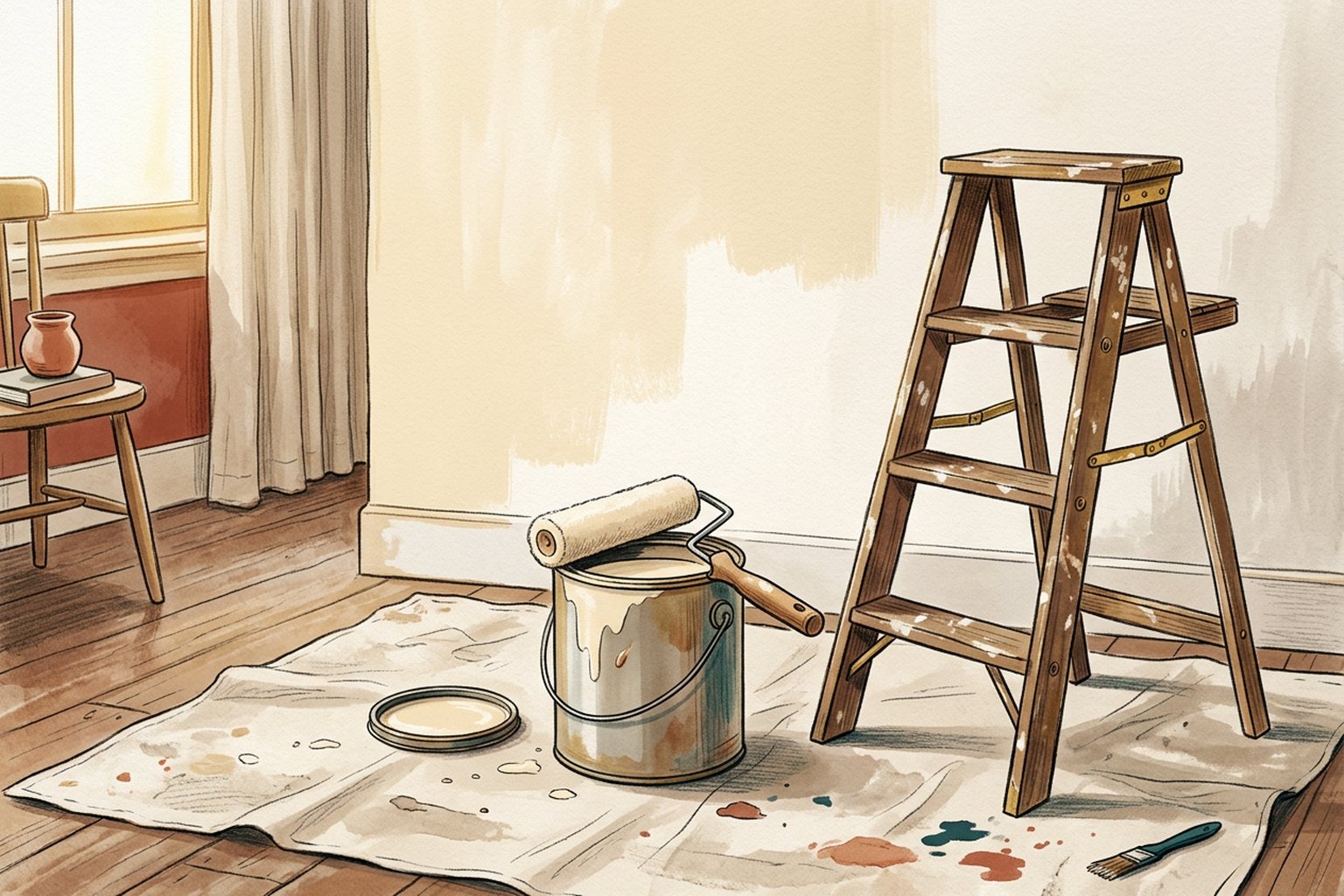
You said the kitchen would take two weekends. It took six. You said the report would be done by Friday, and it was done the following Wednesday. This has happened before, and you probably said something similar last time.
That pattern has a name, the planning fallacy, which Daniel Kahneman and Amos Tversky introduced in 1979 and which has been studied for decades since. This article explains what researchers found and then offers a practical use for a letter: record your estimate on a date, and let your future self grade it.
What the research found
In 1994, Roger Buehler, Dale Griffin and Michael Ross published “Exploring the ‘planning fallacy’: Why people underestimate their task completion times” in the Journal of Personality and Social Psychology. Across five studies, people's predictions for their own academic and everyday tasks were too optimistic. When they thought aloud, they pictured how the task would go and mostly ignored how similar tasks had gone before. They put their past misses down to outside, temporary, one-off causes, so the misses never seemed to count.
Two results are the useful ones. When people were told to connect relevant past experiences to the new prediction, the optimistic bias disappeared. And observers predicting other people's tasks guessed longer times and leaned more on past experience.
There is a practical trick hiding in that last result: before you save the letter, ask someone who knows your habits how long they think the project will take, and write their guess next to yours. Theirs will probably be longer. The letter will tell you which of you was right.
Why the lesson never sticks
Knowing the name does not seem to make it go away. Part of the reason is that by the time the truth arrives, you have often forgotten exactly what you predicted. You remember the plan, but not the number you said out loud. So the miss feels like bad luck, and the lesson fades.
A letter fixes the memory problem. If you write down the estimate on the day you made it, and it comes back to you after the deadline, you can compare the forecast with what happened. You cannot quietly adjust it, because the letter cannot be edited after you save it.
Writing estimates that can be checked
Vague estimates cannot be graded. “Soon” and “a few weeks” are no use to your future self. Aim for dates, not adverbs. For each stage of your project, write a stage name and a calendar date.
For example, for a renovation:
- Paint finished by 14 March.
- New counters in by the end of April.
- Kitchen usable by 15 June.
Then add one honest line about what usually goes wrong. “Delivery dates slip.” “I run out of energy on weekday evenings.” “I underestimate cleaning up.” This is where the research gives you a hint: the optimism disappeared when people linked their predictions to relevant past experiences.
Write how long the last one really took
Write one sentence about the last similar project and how long it really took. “The bathroom was supposed to take a month and took four.” Put that number next to your new estimate, and see how you feel about it.
You do not have to adjust your date right away. Sometimes the new estimate will be longer, and sometimes you will honestly believe this time is different. But the letter will record both, and you will see afterward which of them was right.
The exercise
Pick a project you have not finished, something with a few stages and a deadline you care about. The letter holds five short things: the stages with dates, the line about what usually goes wrong, how long the last similar project really took, someone else's guess, and one line forgiving yourself in advance if the dates slip. You are writing it to learn from the gap, so be kind about it now.
Choose a delivery date shortly after the final deadline, perhaps a week or two later. We email the letter on that day, between 8:00 and noon in your time zone, and by then you will know how it went.
How to read it when it arrives
Read the dates first, then check them against the calendar. Which stage slipped, and by how much? Was it the stage you worried about, or a different one?
Resist the urge to turn the result into a verdict. A missed date is data. The useful question is why: was the task bigger than you thought, did something outside your control happen, or did the estimate rest on a best-case picture? Write your answer under the letter in your own copy, and use it the next time you plan something.
The limits
This is not a method for perfect plans. Nothing in the research promises that writing estimates down will make them accurate, and a letter will not make a project go faster. It gives you a record to learn from.
It is also not advice about how to manage anyone else's schedule. If your plan involves a team, a contractor or an employer, those people will have their own estimates, and you may need to work with them directly.
A sample letter
Dear future me,
Here is my renovation plan. Paint by 14 March, counters by the end of April, a working kitchen by 15 June. [partner's name] says August. Last time the bathroom was supposed to take a month and took four, mostly waiting for tiles, so I am nervous about the counters. If the dates slip, I forgive myself. I would just like to know which one slipped first, and whether I saw it coming. And tell me who was closer, me or [partner's name].
[your name]
Write it now
Choose a project you have not finished yet, and break it into three stages. Write a date for each, one line about what usually goes wrong, the length of the last similar project, and someone else's guess. Set the delivery date a week after your final deadline, and send it.