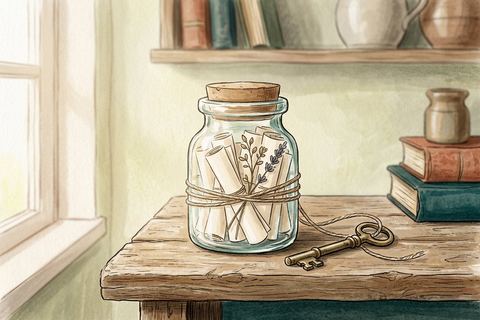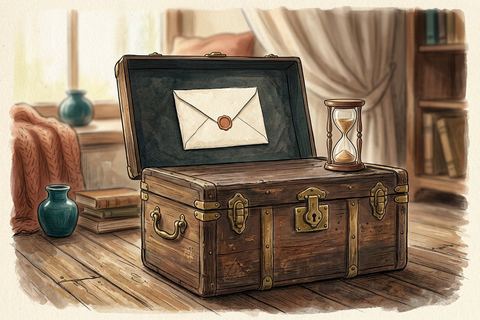
A family time capsule works best when the adults plan it together. The capsule needs a letter from each adult, something the children made, and a date everyone agrees on. This article gives you a plan that fits into one weekend. It also covers the step many families miss: how each letter reaches the child on the day it is opened.
Why families make capsules together
Families and schools have sealed time capsules for a long time. A shared box gives everyone a common project.
A family capsule is also low pressure. Nobody has to write a masterpiece. The box can hold a few pages, a drawing and a small object, and it can sit quietly on a shelf for years. A simple dinner on the day you seal it can make the moment feel special without much effort.
Start with a conversation. Ask the children what they would like to find in the box when they are 18, and write down their answers exactly as they say them. They may change their minds later, and that is fine. The first answers are still part of the record.
Keep the planning in grown-up hands. Children take part in the making. The opening date, the storage and the email plan are decisions for the adults, so explain them in words the children can follow.
Letters from each adult
Each adult writes a dated letter for the box. Keep it short, about one page, and focus on what is true for you now. Write about the house, the routines, the jokes that everyone repeats, and what you hope the child will know about you. Date every letter in full, with the day, month and year written out.
Write about what the family keeps: the Sunday pancakes, the joke that everyone in the house understands, and the place you live (a city or a region is enough). Add one thing you hope the child will remember about you.
Avoid writing about children's personal matters, such as a school problem or a health detail, in a way that could embarrass them later. Ask yourself whether the child would be comfortable reading that sentence at 18. If the answer is no, leave it out.
What children can add on paper
Children add a drawing, a small object or a sentence in their own handwriting. They do not use the service, and nothing they add needs an email address. Keep their contributions on paper only, and let each child decide what goes into the box.
Ideas that work for younger children and teenagers alike:
- A drawing of their home or favorite place
- A list of three things they want to do at 18
- A note with one question for their future self
Children may need help with spelling, and that is fine. The words should still be theirs, so offer help with the spelling and leave the sentences alone.
Choose an opening date everyone can agree on
Pick an opening date that the whole family can agree on before anything is sealed. One clear choice is a child's eighteenth birthday, because everyone can remember that day. Some families choose a grandparent's birthday or a date that marks something the whole household shares. Write the date on the box and in a note inside it.
If the date depends on something that might not happen, add a backup date. A plan is easier to follow when the second choice is written down too. Keep the opening date in the family calendar, with the box's location in the same note.
Store the box dry and labeled, and keep it out of the moving boxes, so it does not get packed away and forgotten. A cupboard that everyone knows is often the best place. Before you seal the box, put a slip of paper on top that lists the adults who wrote letters and the date the box was sealed. Check the box once a year, and make sure the note on the lid still matches the plan.
Plan for the email
This is the step many families miss. Each letter goes to the email address the adult enters when writing, on the date chosen, between 8:00 and noon in that adult's time zone. The email does not go to the child. The service is not intended for children, so the adult must decide how the letter reaches the child on the day.
Two simple options work well:
- Print the letter, and put the printed copy in the box.
- Keep the email, and show it to the child on that day, with a short note.
Do not depend on one email address. If an adult changes address, the letter stays with the old one, because letters cannot be edited on the site. Write a backup plan in the box, such as a printed copy, so one old account cannot end the plan. Nothing is emailed when you write, so keep a copy of each letter in your own records as well.
A sample parent letter to a child
Here is a short example for a parent, to be opened at 18. Replace the details with your own, and use a first name only if you are comfortable with it being stored.
Dear [child's name],
You are turning eighteen, and I hope this box has made it to you in one piece. Right now you are obsessed with the card game where everyone shouts. You want to win every round, and you hold your cards like a secret.
Remember the night the dog ate the birthday cake? We still tell that story at every dinner, and you still insist it was the dog's fault. I hope you still laugh about it.
Whatever you are doing now, I am proud of you.
[your name]
Write it now
Choose one opening date, and write your letter first, so the children can see what a finished letter looks like. Ask each child to add one drawing or one small object on paper. Then write down how each letter will reach its child on the day, and keep that note in the box.